Solar Irrigation for Xiomara
Strengthen Local Food Systems
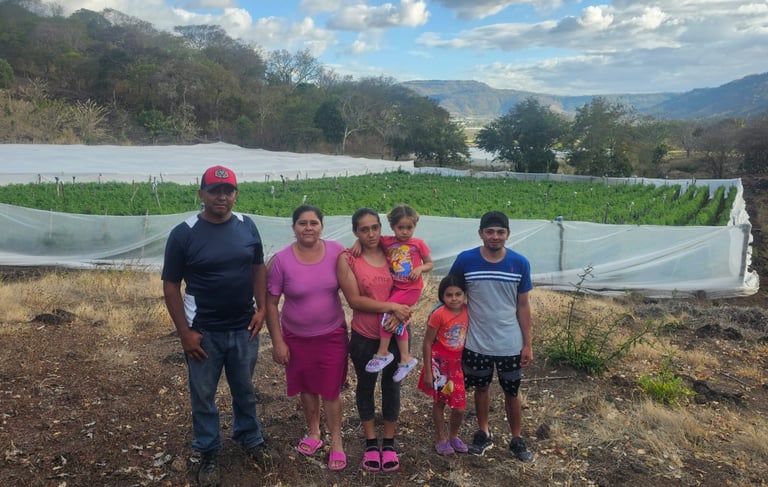
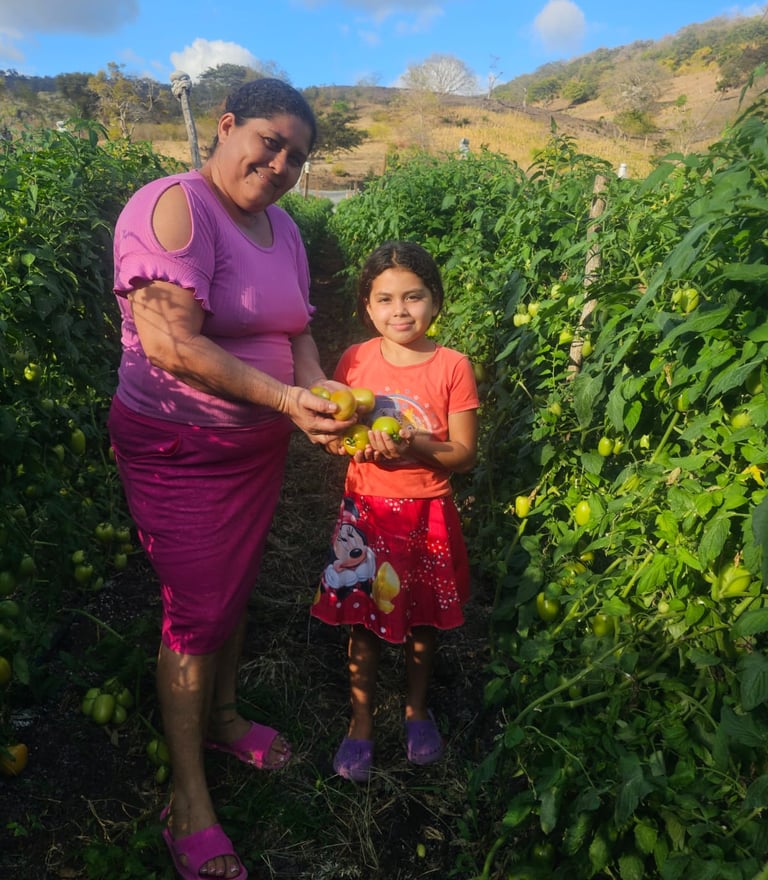
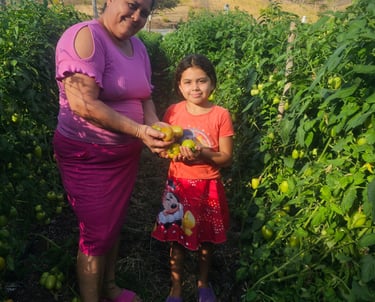
Doña Xiomara and her family grow tomatoes and bell peppers on their 1.7 acre farm in Nicaragua, which are sold in local markets in Managua and Jinotega. They rely on a gas generator to irrigate the farm since rain is unpredictable and scarce in the dry season. The generator is expensive and causes noise pollution. Asplund Earth Alliance is working with Xiomara to bring a solar-powered drip irrigation system to her farm, to reduce costs and emissions.
Smallholder farmers like Xiomara form the backbone of food production in Nicaragua and across much of the developing world, yet they often face the greatest barriers to accessing reliable water, energy, and infrastructure. Supporting farms like hers strengthens local food systems by keeping fresh produce flowing into nearby markets, preserving agricultural livelihoods, and building resilience against increasingly erratic weather patterns. Consistent, well-managed irrigation also protects soil health: drip systems deliver water directly to the root zone, reducing erosion and nutrient runoff while preventing the over-watering and salt buildup that can degrade soil over time. Healthier soil, in turn, supports more diverse and productive crops year after year.
We are raising funds to bring a 1.71 kW off-grid solar system that pumps water from a well on her property into a storage tank. Water then flows through pipes to her crops powered by gravity, using a drip irrigation system to conserve water and provide crops with just enough water all year round. The ability to irrigate crops all year can significantly increase the overall crop yield and the diversity of crops that can be grown.
Solar Saves Money and Improves Farm
By using solar power, Xiomara and her family can save money because they don't have to buy gas for their generator, which reduces local greenhouse gas emissions and noise pollution. Renewable energy systems like this one are especially valuable for smallholder farms, which often lack access to reliable electrical grids and can least afford the volatile costs of fossil fuels. A solar-powered system offers decades of low-maintenance, emissions-free operation, freeing up household income for other needs while reducing dependence on imported fuel. For rural communities, this kind of clean energy investment doesn't just support one farm; it strengthens the broader resilience and sustainability of the local food system as a whole.
We are raising funds to pay for solar modules, a submersible pump, a water storage tank and metal structure, water tubes, filters, and drip irrigation attachments, project development costs, installation labor, and maintenance. Support this project.