Solar-powered Sustainable Farm
April 2026 - Sustainable Nature Farmstay
Himalchuli Nature Farmstay is a sustainable farm and eco-cultural tourism business located in the remote Madi Valley, in Nepal’s southern Chitwan district. Himalchuli was established with the goal of promoting sustainable agriculture and ecotourism in Nepal, and supporting the local community through employment, organic farm training, and working with the community in development activities. They aim to serve as a model for sustainable practices for the surrounding communities as well as visitors to their farmstay, and to demonstrate that eco-cultural tourism can be an economically viable business endeavor that both protects the environment and supports local livelihoods and culture.
Madi Valley is located in the buffer zone south of Chitwan National Park, an area rich in biodiversity and indigenous culture. The communities that live in this remote part of the Chitwan District have long struggled with seasonal flooding, poor infrastructure, and an ongoing human-wildlife conflict due to their proximity to Chitwan National Park. While the national electric grid has reached many parts of Madi, construction delays have left many villages without a reliable source of electricity, with all of Madi still facing power outages during the rainiest months.
Rich in Biodiversity and Indigenous Culture
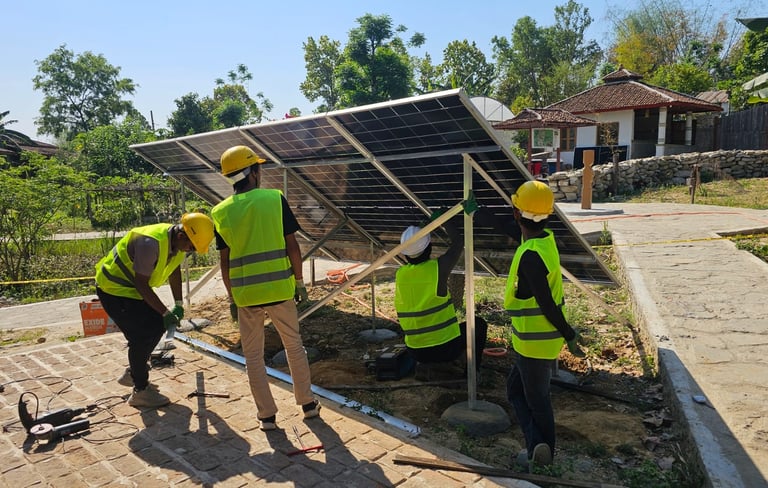
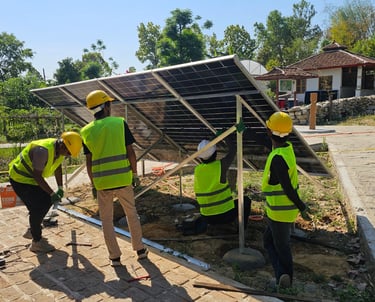
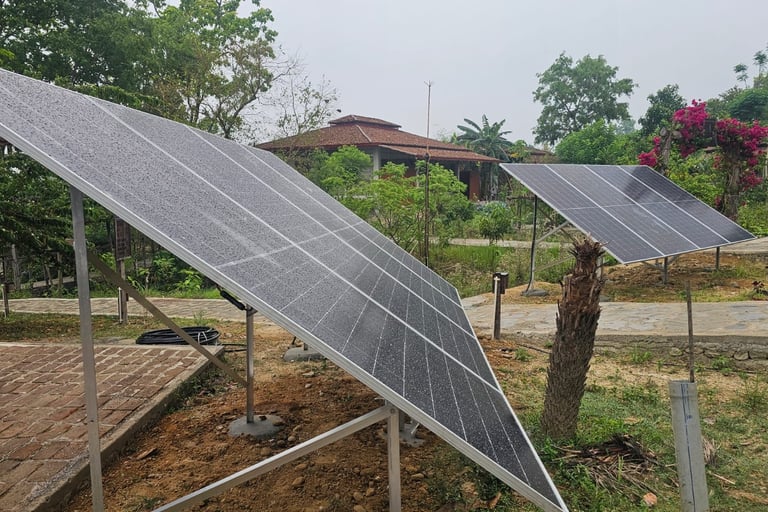
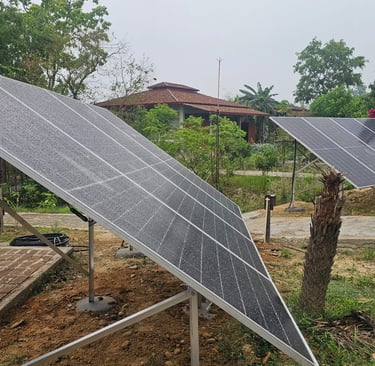
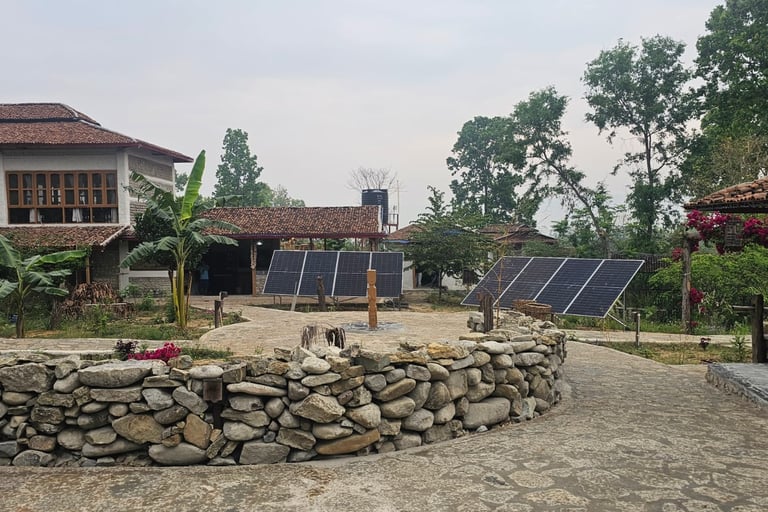
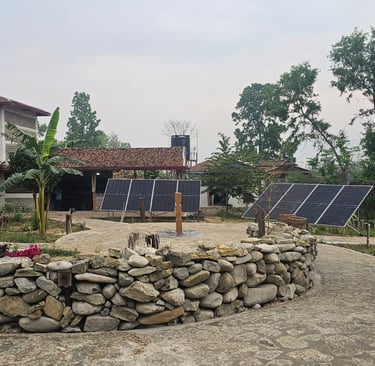
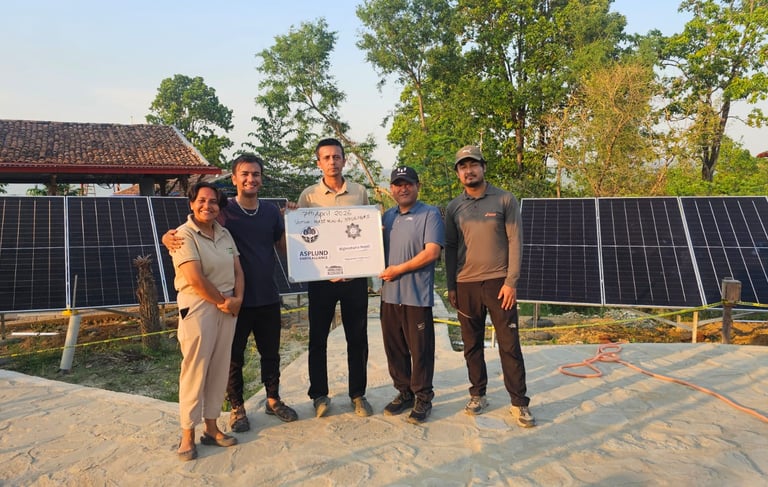
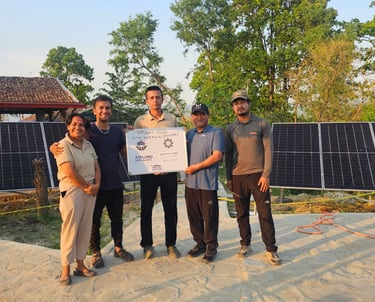
In April 2026, Asplund Earth Alliance worked with local partners Bighnaharta Nepal and Ohm Energy to bring an off-grid battery-based 4.6kW solar system to Himalchuli Nature Farmstay to bring a source of reliable, renewable electricity to their sustainable farm and accommodations. Solar allows the farm to improve its ecotourism operation so that it can better support the local communities and help protect the natural environment. Solar powers lights that prevent wildlife from entering the property and destroying crops, thus improving safety and reducing human-wildlife conflict. With the addition of solar, Himalchuli Nature Farmstay also plans to install street lamps adjacent to their property to protect passing community members from wildlife. Solar power will also be used to pump underground water for farming and household purposes and power refrigeration of produce, lighting, fans, and outlets in accommodations. See more photos of this project here. Thanks to GRID Alternatives and the individual supporters that made this project possibile.